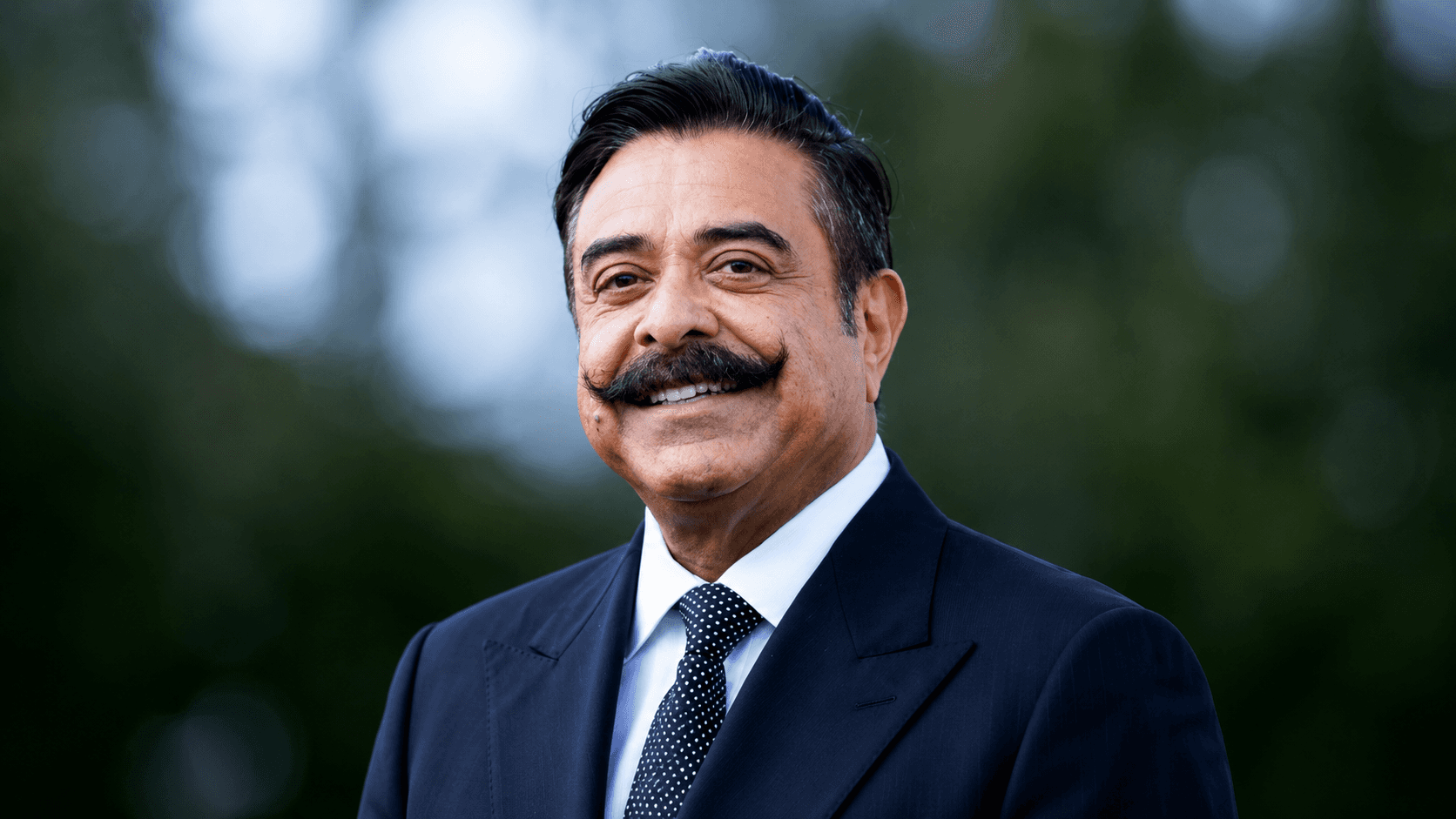
From $2 a Night to a $13 Billion Empire: The Unlikely American Dream of Shahid Khan
He arrived in America at 16 with $500, a snowstorm welcome, and no connections. What he built next rewrote the rules of who gets to succeed.
Jayanth Kumar
May 22, 2026
In the winter of 1967, a 16-year-old boy stepped off a plane in Illinois and into the coldest moment of his life in more ways than one. Shahid Khan had never seen snow before. He arrived with $500 in his pocket, no contacts, and no safety net. That first night, he rented a room at the YMCA for $2.
The next morning, he went to work washing dishes for $1.20 an hour.
He wasn't discouraged. He was paying attention.
The bumper that changed everything
While studying engineering at the University of Illinois Urbana-Champaign, Khan took a job at a small auto parts manufacturer called Flex-N-Gate. It wasn't glamorous work — the company made truck bumpers — but Khan wasn't looking for glamour. He was looking for problems worth solving.
He found one hiding in plain sight. The standard bumper design was inefficient: multi-piece, heavy, and expensive to produce. Khan engineered a one-piece alternative that was lighter, stronger, and significantly cheaper to manufacture. It was a quiet innovation in an unglamorous corner of the industry — exactly the kind of thing most people walk past without noticing.
Khan noticed.
By the time he graduated, he had risen to engineering director at Flex-N-Gate. But he wasn't finished yet. In 1978, he made the move that would define the rest of his life: he took out a $50,000 loan, added $13,000 of his own savings, and launched a company called Bumper Works. General Motors became his first customer.
Then came the move that turned a promising startup into something far larger. When Flex-N-Gate — the very company where Khan had once been an employee — went up for sale, he bought it. He merged the two companies and never looked back.
Building something that runs through the American economy
The growth that followed was steady, methodical, and enormous in scale. By the late 1980s, Flex-N-Gate had secured an exclusive contract to supply bumpers for every Toyota vehicle sold in the United States. That single relationship became the foundation for decades of expansion.
Today, Flex-N-Gate operates 69 manufacturing plants around the world and employs more than 25,000 people. Its components are found in two out of every three cars sold in the United States — a fact that tends to reframe how invisible industrial supply chains actually are. Behind almost every vehicle on an American road is a piece of infrastructure Shahid Khan helped build.
The moves nobody saw coming
Then, just when the story seemed complete, Khan expanded it in directions no one anticipated.
In 2012, he purchased the Jacksonville Jaguars for $770 million, becoming the first ethnic minority owner in the history of the National Football League. A year later, he added Fulham F.C. to his portfolio, acquiring the London-based football club and stepping into European sports ownership. In 2019, he co-founded All Elite Wrestling alongside his son Tony Khan, launching a serious challenger to WWE's decades-long dominance of professional wrestling.
Forbes eventually put a label on all of it, calling Khan "The Face of the American Dream." It's a phrase that can sound like a cliché — until you trace the actual distance between a $2 room at the YMCA and a multi-billion-dollar empire spanning manufacturing, sport, and entertainment across three continents.
What the story is really about
Khan's journey is often retold as an immigration story, and it is. But it's also something more specific: a story about the kind of attention that turns overlooked problems into generational wealth.
He didn't arrive with connections or capital. He arrived with curiosity and a willingness to work — and then kept asking, in every room he entered, what wasn't working and whether he could fix it.
The bumper was just the beginning. The dishes were just the start.
About
Featured Posts


Explore Topics