>
>
He Built a Viral AI Agent as a Retirement Project. OpenAI Just Hired Him.
He Built a Viral AI Agent as a Retirement Project. OpenAI Just Hired Him.
Peter Steinberger wasn't looking for a job. He was just shipping experiments in public. Then OpenClaw happened.
Jayanth Kumar
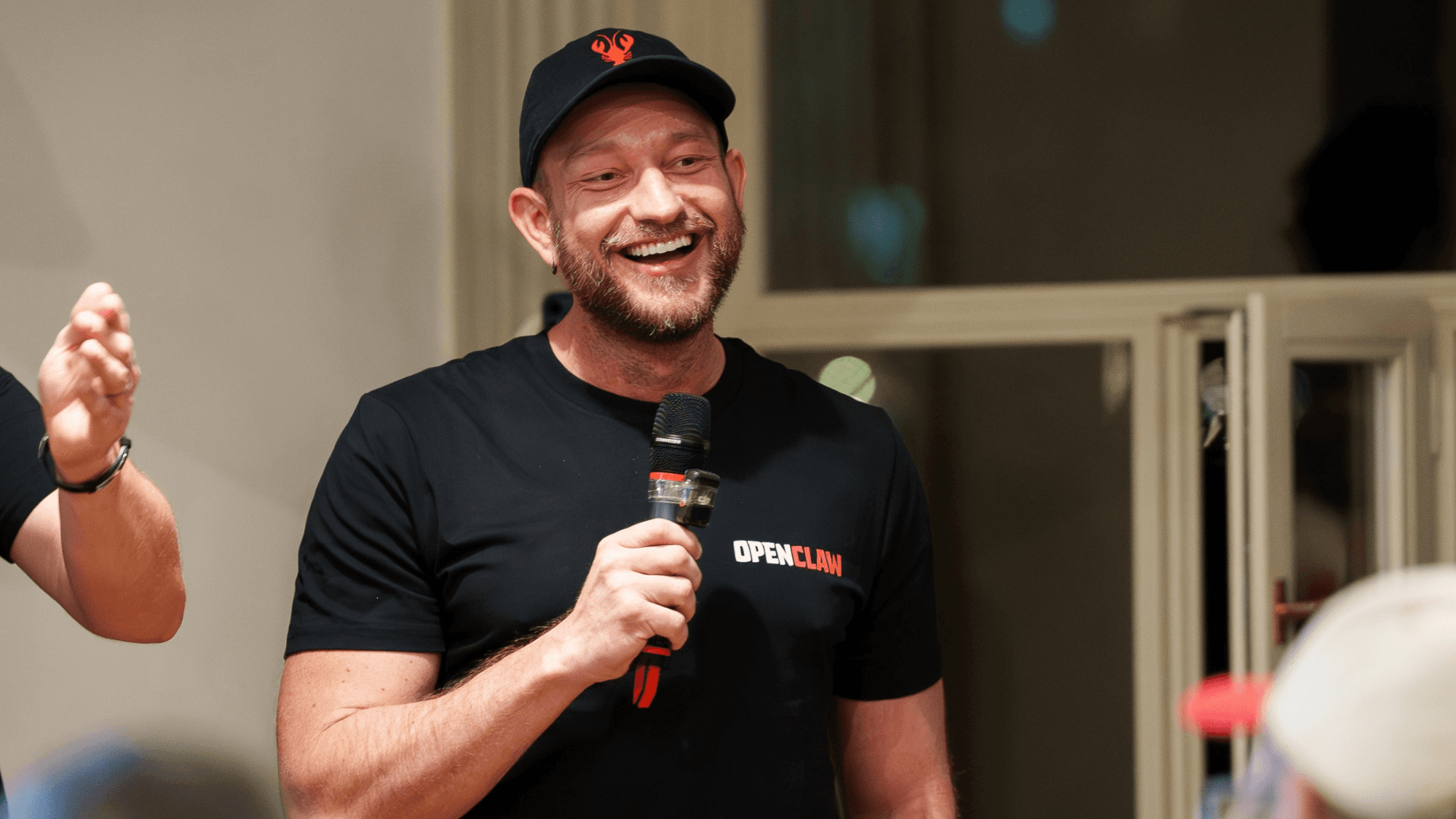
Peter Steinberger had already done the startup thing. He founded PSPDFKit, built it into a widely used PDF SDK embedded across mobile and enterprise apps, sold most of his stake following a 2021 investment round, and stepped back from operating full-time. He wasn't burned out. He just wanted to build again quietly, without pressure, on his own terms.
What followed was a side project that climbed to six-figure GitHub stars, drew millions of visits from developers around the world, and ultimately landed him a role at one of the most closely watched companies in tech.
OpenAI has announced that Steinberger is joining the company, with CEO Sam Altman describing his work on autonomous AI agents as soon becoming a core part of OpenAI's product direction. OpenClaw, the open-source agent framework at the center of it all, won't disappear
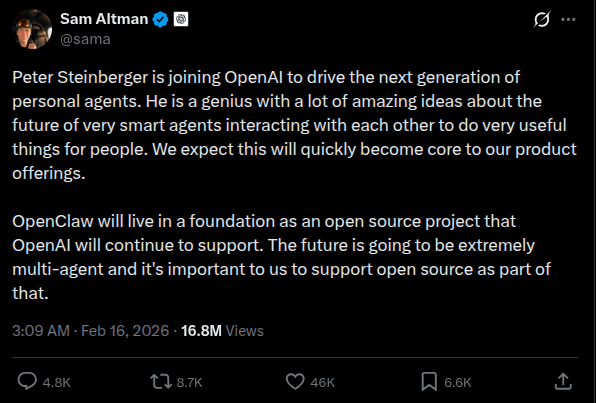
depop ebay acquisition it will continue under a foundation backed by OpenAI, preserving its open-source roots while gaining the infrastructure and safety support needed to scale responsibly.
The question that started everything
Steinberger wasn't trying to build a platform. He was chasing a single question that kept pulling at him after he stepped away from running PSPDFKit: what if an AI assistant didn't just respond to instructions, but actually acted on its own?
Early experiments surfaced casually online under names that kept shifting — Clawdbot, then Moltbot — before the project settled as OpenClaw. Rather than another chatbot interface, it became a framework for software agents capable of operating real applications autonomously: managing inboxes, scheduling meetings, booking travel, coordinating workflows, and even interacting with other agents on their own dedicated social platform.
Released gradually between November 2025 and January 2026, OpenClaw spread fast. Developer communities picked it up quickly, the repository accumulated six-figure GitHub stars, and international adoption surged as developers connected it to local models and messaging platforms in their own markets.
For a retirement project, it had gotten remarkably loud.
Why OpenAI structured the deal the way it did
OpenAI's announcement was careful about framing. This wasn't a straightforward acqui-hire where a promising project gets absorbed into proprietary code and quietly disappears. Instead, OpenClaw will be maintained under a foundation that OpenAI backs an arrangement designed to keep the ecosystem open while giving Steinberger access to compute resources, engineering collaboration, and the safety infrastructure that running autonomous agents at scale genuinely requires.
That last part matters more than it might sound. OpenClaw's openness the same quality that made it spread so quickly also exposed real risks. Security researchers flagged concerns about misuse, scams, and vulnerabilities inherent to autonomous agents interacting with real services at scale. A framework that can book your travel and manage your inbox can, in the wrong hands, do considerably more damage than a chatbot that gives bad advice.
Moving the project under a foundation backed by a major AI lab creates room for governance and safeguards to develop alongside the technology, rather than chasing it from behind.
A pattern that keeps repeating
Steinberger's path independent builder, public shipping, viral traction, major lab recruitment — is becoming a recognizable arc in AI. Influential open-source developers are increasingly being pulled into large AI companies after proving real demand in public, bypassing the traditional route of internal R&D producing every meaningful advance.
The dynamic makes a certain kind of sense. Independent builders can move fast, take risks, and prototype directly in the open without the constraints that come with working inside a large organization. Infrastructure companies then move to industrialize what survives. The result is a division of labor that neither side fully planned but both seem to benefit from.
For startups watching from the outside, the signal is pointed. Proving usefulness is no longer the hard part. Scaling safely, with access to frontier compute and global distribution, is where the gap opens up and where large labs have a structural advantage that's difficult to close independently.
What comes next
How OpenAI stewards OpenClaw will likely be watched as closely as the technology itself particularly around governance transparency, how licensing evolves, and whether monetization starts to emerge around agent capabilities rather than model access alone.
The broader shift the hire reflects is harder to miss. Chat-based AI changed the interface layer. Agent frameworks are changing the execution layer programs that perform tasks rather than describe them, operating across real services in the real world.
Steinberger didn't set out to build the defining example of that shift. He was just a retired founder, shipping experiments because he wanted to, asking a question that turned out to matter more than he expected.
In this phase of AI, it turns out, the distance between side project and industry direction can be surprisingly short.
About
Explore Topics