>
>
OpenAI Just Paid $60 Million for a Startup That Wants to Give AI Your Complete Medical History
OpenAI Just Paid $60 Million for a Startup That Wants to Give AI Your Complete Medical History
Torch built the missing layer between fragmented health data and AI that can actually use it. OpenAI wants that layer.
Jayanth Kumar
Healthcare has an information problem that predates the internet. A patient's medical history is scattered across hospitals, pharmacies, labs, wearables, and genetic testing platforms rarely talking to each other, rarely in one place, and almost never in a format that makes personalized care easy to deliver.
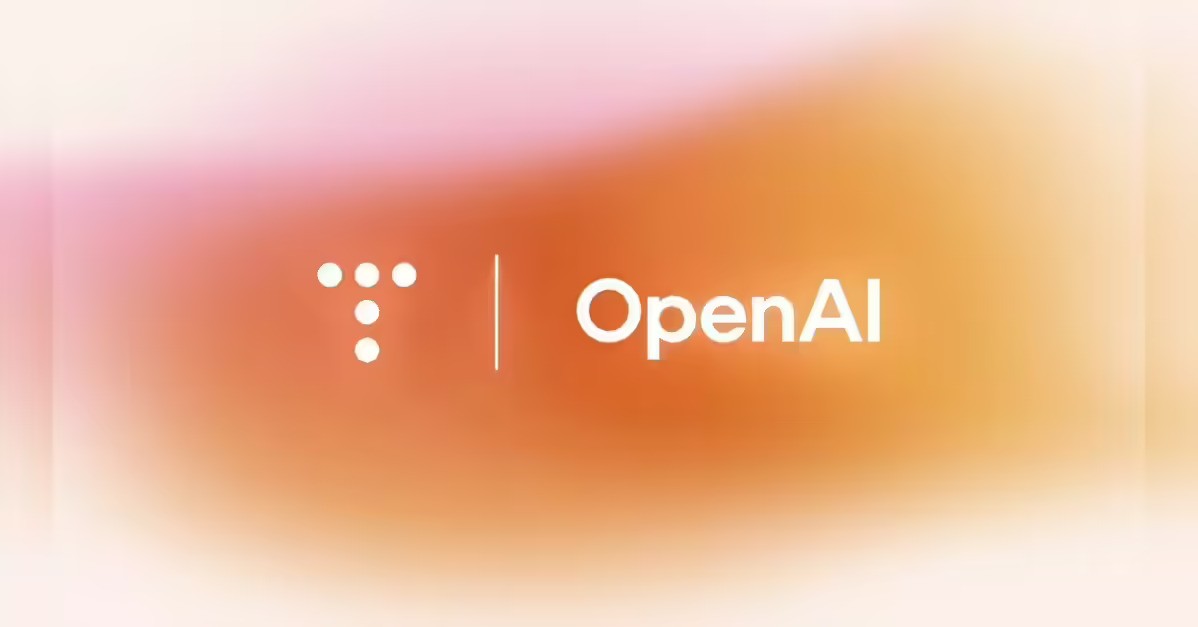
Torch was built to fix that. And OpenAI just acquired it for a reported $60 million.
The deal signals a deliberate step forward in OpenAI's healthcare ambitions, accelerating the development of ChatGPT Health — its conversational tool for navigating complex medical records with technology purpose-built for exactly the problem it needs to solve.
What Torch actually built
Founded in 2024 by CEO Ilya Abyzov alongside co-founders Eugene Huang and a small team that included physicians James Hamlin and Ryan Oman, Torch set out to do something deceptively simple: bring a patient's entire medical picture into a single, coherent, AI-readable format.
In practice, that means aggregating labs, prescriptions, visit notes, wearable data, and genetic test results into what the company called a "unified medical memory" a structured foundation that large language models can actually work with. The goal wasn't to build another health app. It was to build the layer underneath all health apps, the connective tissue that makes personalized AI-driven care possible in the first place.
The problem Torch was solving is well understood inside healthcare but underappreciated outside it. When an AI tool lacks complete patient context, the results range from unhelpful to genuinely unsafe. Missing a prior diagnosis, an existing prescription, or a relevant test result isn't a minor gap in a medical setting, it's the kind of gap that causes harm.
The backstory behind the founders
Torch's origins are inseparable from Abyzov's previous venture, Forward a direct-to-consumer primary care company that used tech-enabled clinic pods called CarePods and raised hundreds of millions of dollars before abruptly shutting down operations in late 2024.
Where Forward was ambitious in scope and ultimately unable to sustain itself, Torch represented a leaner, more focused response to the same underlying challenge: how do you make digital health actually work for the patient in front of you? By narrowing the problem to data connectivity and integration rather than trying to reinvent the entire care model, Abyzov and his team built something more durable and, as it turned out, more acquirable.
Why OpenAI moved on it
ChatGPT Health is OpenAI's attempt to bring conversational AI into one of the most complex and regulated spaces in professional services. The product helps users navigate medical records through natural language an experience that sounds simple but requires extraordinary precision and contextual depth to deliver safely.
Torch addresses the hardest part of that challenge directly. Its technology doesn't just store health data; it organizes it into a format that large language models can actually interrogate usefully. Bringing the Torch team in-house gives OpenAI not just the technology but the specialized knowledge technical, medical, and regulatory needed to build in a space where HIPAA compliance and data privacy aren't optional considerations but fundamental design constraints.
That expertise is genuinely difficult to hire for and even harder to build from scratch. For a company moving quickly into healthcare, acquiring a small team that has already navigated those constraints is a faster and lower-risk path than trying to develop it internally.
The wider pattern
Torch's acquisition fits a broader trend reshaping the health-tech landscape. Specialist startups solving specific vertical problems particularly around data integration and connectivity are increasingly being absorbed by larger AI companies looking to accelerate their way into regulated industries.
The dynamic creates a particular kind of opportunity for founders willing to go deep on hard, unglamorous infrastructure problems that larger players need but struggle to build themselves. Data plumbing isn't the most exciting pitch, but it turns out to be exactly the kind of thing that gets acquired.
For OpenAI, the $60 million is less a bet on a startup and more an investment in the foundation that makes everything else in healthcare AI possible. Without reliable, comprehensive patient context, even the most capable language model is working with one hand tied behind its back.
Torch was building the other hand. Now OpenAI has it.
About
Explore Topics