>
>
The New Zealand Farmer Behind the AI Cow Collar Startup That Just Hit $2 Billion
The New Zealand Farmer Behind the AI Cow Collar Startup That Just Hit $2 Billion
Craig Piggott grew up on a dairy farm watching how much time herd management ate up. A decade later, Founders Fund just valued his fix at $2 billion.
Jayanth Kumar
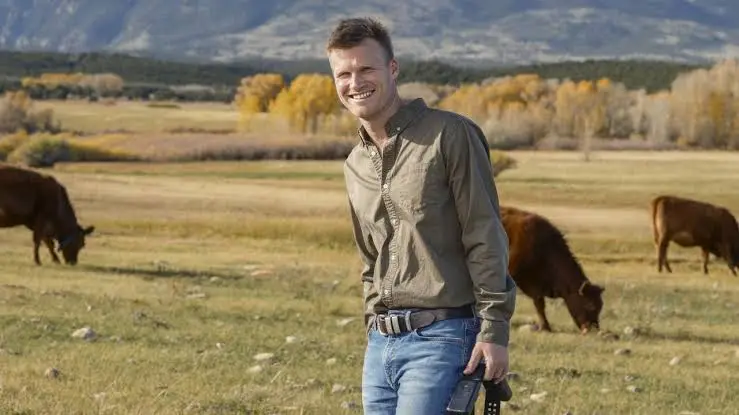
Craig Piggott's understanding of farming friction didn't come from a case study. It came from growing up on a dairy farm in Waikato, New Zealand, watching grazing plans shift, herds move, and boundaries get adjusted each change translating into hours of setup and supervision that someone had to physically be there for.
That observation became Halter, the AI cow collar startup Piggott founded in 2016 at just 21 years old. The company has now raised $220 million at a valuation of more than $2 billion, led by Peter Thiel's Founders Fund.
Piggott's path to building Halter wasn't a straight line into agritech. After studying mechanical engineering at the University of Auckland, where he graduated with first-class honors, he started his career at Rocket Lab, immersing himself in high-performance engineering. But the pull back toward the problem he understood most the unglamorous mechanics of running a farm proved stronger.
The idea behind Halter was simple to explain and considerably harder to execute: replace the most time-consuming parts of herd management with a system operable from a phone. What the company actually built is a full setup rather than a single gadget AI-powered collars, connectivity towers, and a mobile app that let ranchers virtually fence, move, and monitor cattle using cues like sound and vibration.
The execution challenge was real. Building reliable hardware for unpredictable outdoor conditions weather, distance, patchy network coverage, animals that need consistent training meant Halter's progress came almost entirely through deployment. Years went into getting the system onto actual properties, refining its reliability, and supporting ranch teams who needed problems solved quickly, not eventually.
That groundwork paid off most visibly in the United States, where large ranch sizes make labor and logistics genuinely expensive. In June 2025, Halter raised $100 million in a Series D round that valued the company at $1 billion, with backing from BOND, NewView, Bessemer Venture Partners, DCVC, Blackbird, Icehouse Ventures, and Promus Ventures. At the time, the company was already working with around 150 ranchers across 18 states.
Less than a year later, that number has more than doubled. With the new $220 million raise, Halter has crossed the $2 billion mark proof that the thesis Piggott started with on a small dairy farm in Waikato is now resonating with some of the most prominent investors in tech.
About
Explore Topics