>
>
Jeff Bezos Nears $10 Billion AI Funding Round After Warning of an 'Industrial Bubble'
Jeff Bezos Nears $10 Billion AI Funding Round After Warning of an 'Industrial Bubble'
Project Prometheus is the AI lab Jeff Bezos co-founded in November 2025 — focused not on text models but on physical AI for manufacturing. It has now raised $10 billion at a $38 billion valuation, anchored by BlackRock and JPMorgan, just months after launch and before shipping a single product. The irony of a bubble-warner leading one of the largest AI rounds of the year is not lost on anyone.
Jayanth Kumar
Project Prometheus did not exist six months before it raised $10 billion.
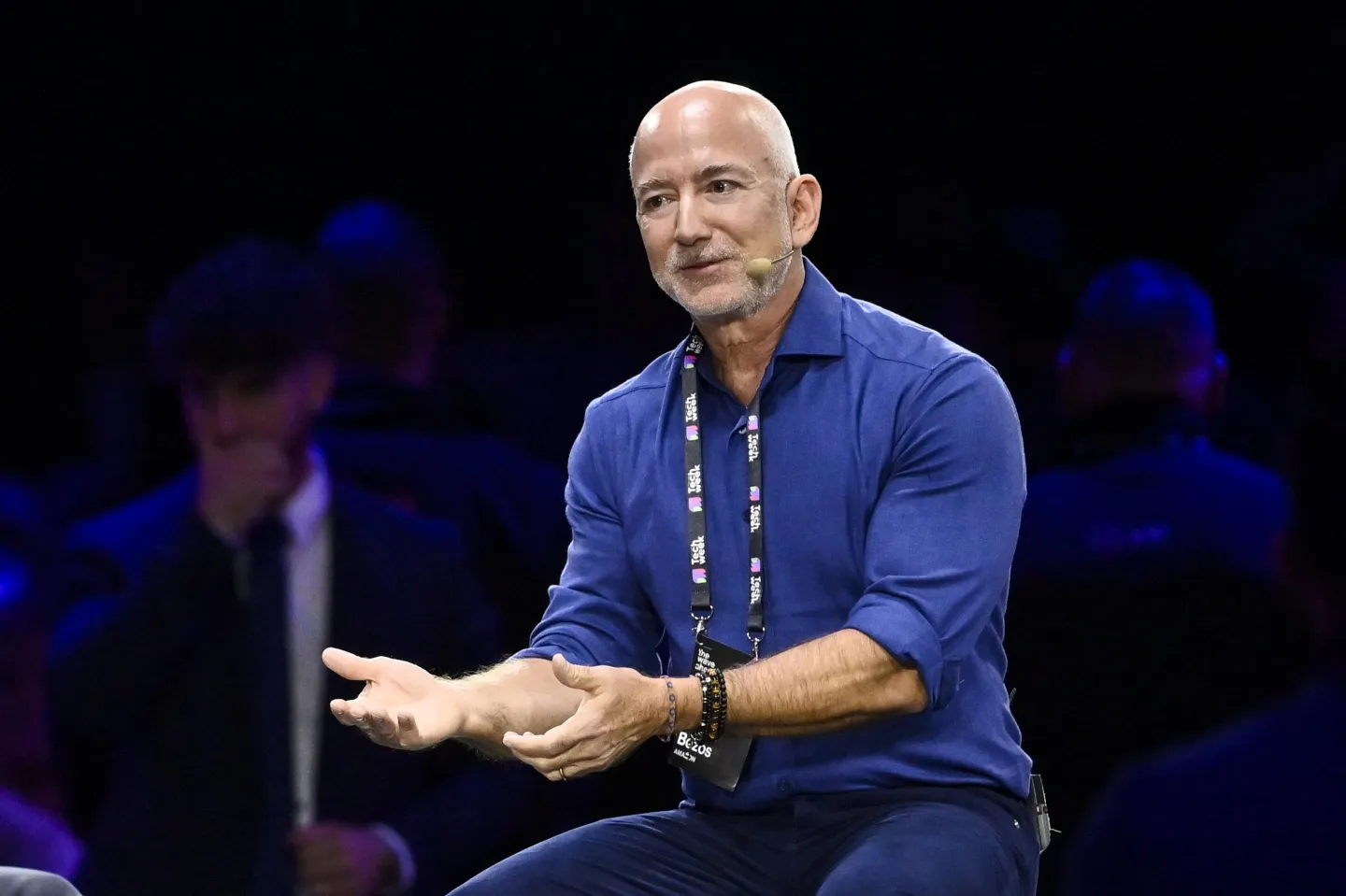
Jeff Bezos co-founded the physical AI laboratory alongside former Google X scientist Vikram "Vik" Bajaj in November 2025, launching it with $6.2 billion in initial funding. By April 2026, the company had closed a further $10 billion round at a post-money valuation of approximately $38 billion anchored by JPMorgan Chase and BlackRock, with additional participation from investors in the Middle East and Southeast Asia. There is no lead investor. The total committed capital now exceeds $16 billion, making Prometheus one of the best-funded private AI companies on the planet, and it has not yet shipped a single commercial product.
The irony of the moment is real: Bezos has publicly cautioned that AI investment is beginning to resemble an industrial bubble. He is now the central figure in one of the largest AI capital raises of 2026.
The distinction Bezos appears to be drawing is between the category he is worried about speculative text-model bets chasing general-purpose AI supremacy at valuations disconnected from commercial reality and the category he is funding: what Prometheus calls "physical AI." This is not another large language model lab competing with OpenAI or Anthropic for benchmark supremacy. Prometheus is building AI models trained on real-world industrial and scientific data models designed to understand the physical world well enough to help engineer and manufacture cars, computers, aircraft, and spacecraft. The target market is global manufacturing, a $16.8 trillion addressable market where AI penetration currently sits below 1%.
The investor profile reflects this positioning deliberately. JPMorgan and BlackRock, the round's institutional anchors, are not typical venture-capital AI backers they are firms with deep exposure to industrial sectors, infrastructure, and the companies that would actually buy what Prometheus is building. Bezos has reportedly targeted non-Silicon Valley investors precisely because physical AI's customers are in physical industries. The round's sovereign wealth fund participation from the Middle East and Southeast Asia signals the same logic: these are regions with large manufacturing footprints and appetite for industrial transformation.
Reports have also described a separate structure being assembled alongside Prometheus a holding company that could command tens of billions of dollars to acquire industrial businesses that would feed operational data back into Prometheus's AI models, creating a self-reinforcing competitive advantage as the system learns from the companies it helps transform.
At $38 billion, Prometheus is valued far below OpenAI (reportedly $852 billion as of early 2026) or Anthropic (raised at a $380 billion valuation in February 2026). Bezos has committed $6.2 billion of his own capital to the company. That is not the behaviour of someone who thinks he is watching a bubble from a safe distance. It is the behaviour of someone who believes he has identified where the real value will ultimately be created and who is willing to be on record saying the rest of the market may be wrong, while acting on the assumption that he is right.
About

Explore Topics