>
>
Reid Hoffman Says Doctors Who Skip AI for a Second Opinion Are "Bordering on Malpractice
Reid Hoffman Says Doctors Who Skip AI for a Second Opinion Are "Bordering on Malpractice
The LinkedIn co-founder wants frontier AI models in every clinical workflow — and eventually, inside the FDA.
Jayanth Kumar
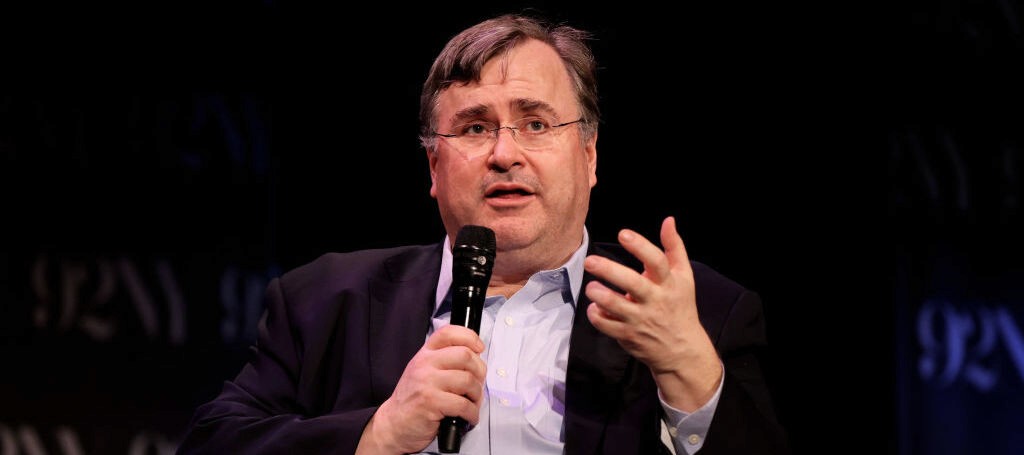
Reid Hoffman has a blunt message for physicians who aren't yet running their toughest cases past an AI model: the omission itself might constitute a risk to patients.
Speaking at WIRED Health in London on April 16, the LinkedIn co-founder and Manas AI co-founder argued that frontier large language models the kind built by OpenAI and Anthropic — have become capable enough that ignoring them in clinical practice carries real consequences. "If as a doctor, you're not using one or more frontier models as a second opinion, my belief is you're bordering on committing malpractice," Hoffman said.
It's a provocative claim, particularly from someone who sat on OpenAI's board, helped fund the lab early on, and now runs his own AI drug discovery startup. But Hoffman framed the argument less as industry self-promotion and more as a practical patient-safety case. He noted that these AI systems, even without medical-specific training, have absorbed more than a trillion words of information, and that as a second opinion, that represents capabilities no individual human being possesses.
The case for AI as a second set of eyes
Hoffman isn't arguing that AI should replace physicians. His framing is closer to AI as a quiet check on the doctor's own reasoning — present in the room, but not making the final call. He said he personally uses frontier models as a second opinion for his own health decisions, and that his personal concierge doctors do the same. Doctors remain free to disagree with the model's output, he said, but should at minimum be engaging with it: "You could very well go, 'No, I think you're wrong, I think it's this,' but if you're not using this as a second opinion, you're making a mistake, both as a doctor and as a patient."
The framing lands at a complicated moment. A major study earlier in the year found that large language models pose real risks to members of the general public seeking medical advice directly, citing inaccurate and inconsistent information. Hoffman's response to that concern is structural rather than dismissive: keep the AI in the loop as a tool, but keep the human physician firmly in charge of the decision.
He extends similar logic to systems already under strain. With NHS waiting lists stretching and family doctors in short supply, he envisions an AI medical assistant on every smartphone functioning as an early triage layer — sorting which cases genuinely need a human appointment, arguing that with too few doctors and limited access, everyone should be interacting with this kind of medical assistant as part of how a system like the NHS gets redesigned.
The company behind the conviction
Hoffman isn't arguing this from the sidelines. In January 2025, he co-founded Manas AI alongside Pulitzer Prize-winning oncologist Siddhartha Mukherjee, who serves as CEO. The company launched publicly with a $24.6 million seed round led by General Catalyst and Hoffman, with Greylock also participating.
Manas AI is building an AI engine aimed at accelerating drug discovery for aggressive cancers, with an initial focus on triple-negative breast cancer, prostate cancer, and lymphoma, with the explicit goal of compressing a decade-long discovery process into a few years.
The internal division of labor reflects Hoffman's broader thesis about human-AI collaboration. Mukherjee, the practicing oncologist, reviews the AI engine's proposals and separates genuinely promising candidates from the ones he describes as "bonkers stupid," while Hoffman, by his own framing, focuses on the AI side with neither working in isolation. As Hoffman told CNBC, the approach only works because it isn't purely the best of science or purely the best of AI; both have to be combined, because either alone is insufficient.
Hoffman wants the model pushed further still, into regulatory review. He'd like to see agencies like the FDA use biological models themselves to assess emerging medicines and fast-track promising candidates, though he acknowledges that shift isn't imminent, saying that as a Silicon Valley person he'd love to see the FDA running tests with biological models to identify treatments worth fast-tracking based on lower likelihood of negative consequences, but doesn't expect that anytime soon.
The longer-term vision is where Hoffman seems most animated. He believes Manas AI's approach, starting with cancer, could eventually extend to identifying drug candidates for chronic and extremely rare diseases, predicting that within a decade, every major disease will have target molecules capable of making a serious difference.
For doctors today, the immediate decision is considerably smaller: whether to open a second browser tab before finalizing a diagnosis.
About

Explore Topics