UK Nutrition Brand Huel to Be Acquired by Danone in $1.2 Billion Deal
Huel started as a grey powder a lot of people laughed at. It ends as a $1.2 billion acquisition by Danone — a vindication of the complete nutrition category and the founders who built it before anyone else believed in it.
Jayanth Kumar
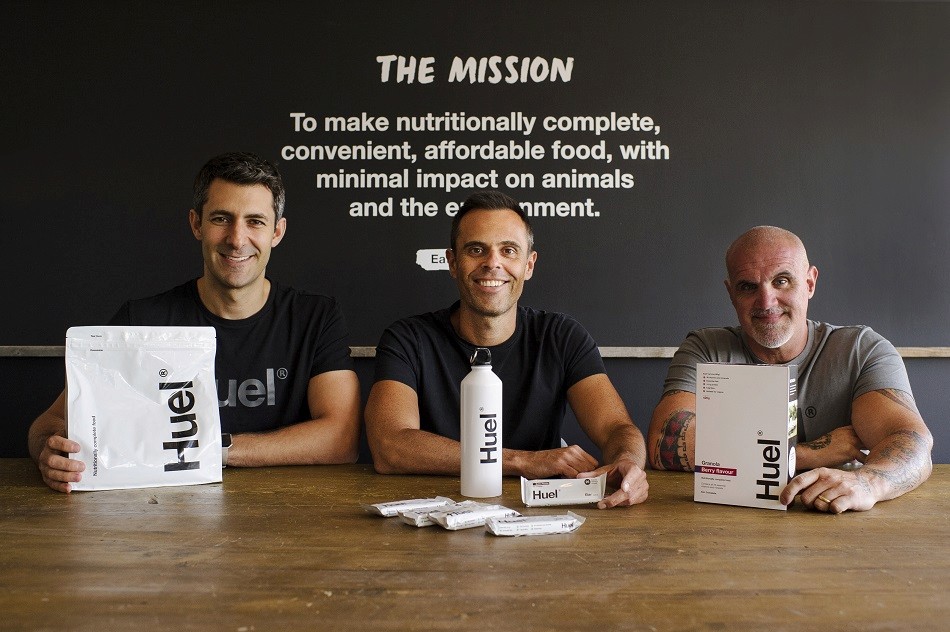
Huel is a portmanteau of "human" and "fuel," which tells you everything about what it was trying to be and nothing about how it got there.
Julian Hearn founded the company in 2015 with a simple premise: that a nutritionally complete meal could be delivered in powder form, accessible to anyone, cheap enough to be a daily staple, and sophisticated enough to appeal to people who cared about what they put in their bodies. The product contained a balance of protein, carbohydrates, essential fats, fibre, all 26 essential vitamins and minerals, and phytonutrients. It was plant-based before plant-based was a marketing category.
For the first several years, Huel was mostly written about as a curiosity — the grey powder that time-poor tech workers ate at their desks, or the meal replacement that people turned to when cooking felt like too much. The product itself was polarising. The company building it was not: from 2016 onward, revenues grew at an average of 74% annually. By FY2024, Huel had generated £214 million in revenue with a 59% gross margin and adjusted EBITDA of £18.2 million. It had retail presence in over 25,000 stores worldwide. Its product range had expanded from the original powder into ready-to-drink bottles, hot savoury meals, and protein bars. The investor list includes actor Idris Elba and TV presenter Jonathan Ross not typical backers of nutrition brands, but a signal of the cultural territory Huel had reached.
Danone announced the acquisition on March 23, 2026, in a deal valued at approximately €1 billion around $1.2 billion at current exchange rates. The deal was advised by Centerview Partners on Huel's side. Danone had entered the complete nutrition category itself just months earlier with Alpro Meal To Go, a plant-based ready-to-drink meal launched in Europe. That product was, in the words of one industry analyst, effectively a Huel alternative but it arguably lacked Huel's brand strength and the decade of consumer trust the brand had built.
The acquisition logic is clear on both sides. Huel gets what it has outgrown its ability to fund alone: global distribution infrastructure, manufacturing scale, R&D capability, and access to the 120-plus markets where Danone already operates. Danone gets what it could not easily build internally — a direct-to-consumer brand with genuine Gen Z and millennial resonance, a subscription customer base, and a position in the complete nutrition market, which was estimated at $5.9 billion in 2025 and growing at 6.5% annually.
At roughly 22x EBITDA, the price is steep by traditional food industry standards. Danone is paying for trajectory, not history. Revenues are expected to exceed £250 million in 2026. For a brand that spent its early years being dismissed as a niche curiosity, the €1 billion valuation is the most expensive way anyone has yet found to say they were wrong.
About

Explore Topics