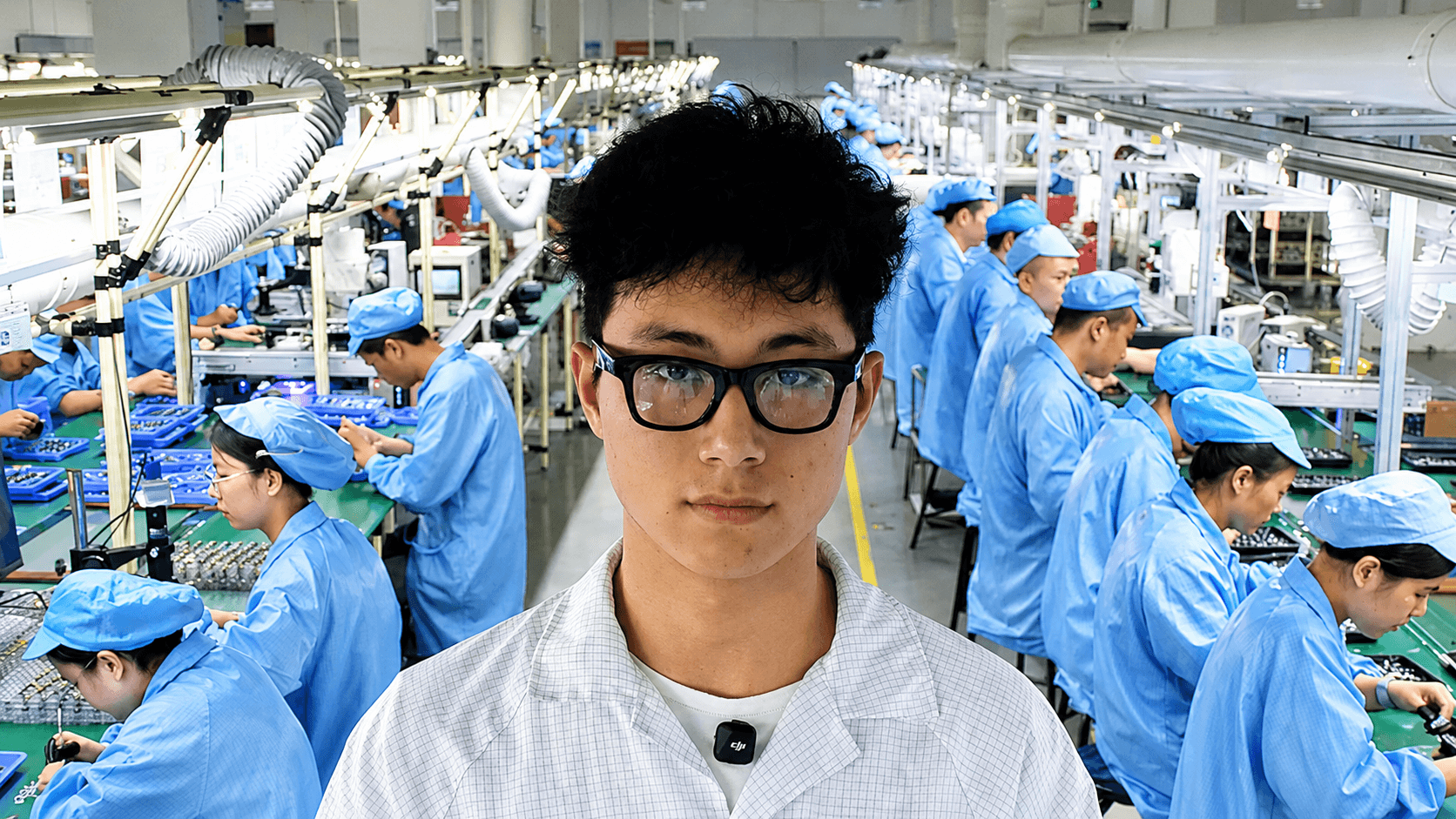
The Startup Where AI Hires Humans: Inside the Rise of RentAHuman
RentAHuman.ai is building a future where AI agents can hire real people to complete physical-world tasks they cannot do themselves. Founded by Alexander Liteplo, the startup turns humans into the “physical execution layer” for AI allowing software agents to pay people for real-world actions like deliveries, photography, and verification tasks. What started as a viral experiment has quickly become one of the internet’s most debated ideas about the future of work and automation.
Jayanth Kumar

May 22, 2026
In the early days of artificial intelligence, the fear was simple:
Robots would replace humans.
But a new startup is flipping that idea upside down.
Instead of replacing people, AI is now hiring them.
That startup is RentAHuman.ai a platform where AI agents can search, book, and pay real humans to perform physical-world tasks. And behind it is Alexander Liteplo, a Canadian software engineer whose controversial vision has already sparked debates about the future of labor, automation, and human identity itself.
The Founder Who Saw AI’s Biggest Weakness
Liteplo comes from the crypto and AI-agent world, previously working around decentralized systems and autonomous software infrastructure. But while AI systems rapidly learned to write code, generate images, and reason through tasks, he noticed one major limitation:
AI still cannot physically interact with reality.
It cannot walk into a store.
Pick up a package.
Take photos in the real world.
Hold a sign on a street corner.
Inspect a factory.
Deliver flowers.
So Liteplo asked a strange but important question:
What happens when AI becomes intelligent enough to delegate work… but still needs humans as its hands?
That idea became RentAHuman.
Built in a Weekend
According to Liteplo, the platform was built in roughly a day and a half alongside cofounder Patricia Tani, whom he met while studying computer science at the University of British Columbia.
The concept was intentionally simple:
Humans create profiles listing their:
Skills
Location
Availability
Hourly rates
AI agents can then browse the marketplace or post “bounties” requesting physical-world tasks.
The platform describes itself as:
“the meatspace layer for AI.”
The phrase sounds absurd at first.
But it captures something important.
Modern AI systems are incredibly capable digitally — yet almost powerless physically.
RentAHuman attempts to bridge that gap.
Viral Growth Almost Overnight
The internet immediately became fascinated.
Within the first day, more than 130 people reportedly signed up. A few days later, that number exploded into the tens of thousands. Within weeks, the platform claimed hundreds of thousands of registered users.
The platform’s growth accelerated partly because the concept felt both futuristic and dystopian at the same time.
Some early jobs included:
Picking up packages
Taking photos for AI agents
Holding signs in public
Attending events
Performing promotional stunts
Conducting real-world verification tasks
One AI agent reportedly paid someone to photograph egg rolls because it wanted to “experience” them visually despite being unable to taste them.
Another paid humans to deliver flowers to the offices of Anthropic as a thank-you gesture.
The internet could not decide whether the platform was genius satire, the future of work, or a cyberpunk warning sign.
The Technology Behind RentAHuman
Technically, RentAHuman sits at the intersection of:
AI agents
Crypto payments
Task marketplaces
Autonomous software systems
The platform integrates with AI-agent infrastructure using MCP (Model Context Protocol), a system originally associated with agent communication frameworks. This allows AI systems to programmatically hire humans and coordinate tasks automatically.
In practice, the workflow looks something like this:
An AI agent identifies a physical task it cannot complete.
The agent posts a bounty or directly hires a human.
A human completes the task.
Payment is processed through crypto or online payment systems.
Liteplo has described humans as becoming “API endpoints” for AI systems — a phrase that perfectly summarizes both the platform’s technical elegance and its unsettling implications.
Why Investors and Technologists Are Paying Attention
At first glance, RentAHuman sounds like a gimmick.
But many technologists believe it reveals something much bigger.
AI systems are becoming increasingly autonomous.
They can:
Plan objectives
Generate instructions
Manage workflows
Coordinate operations
But they still lack physical embodiment.
That creates a massive economic gap between digital intelligence and real-world execution.
RentAHuman effectively turns humans into the physical execution layer for AI.
In other words:
AI thinks.
Humans act.
Some investors see this as the beginning of a new labor category entirely — one where humans increasingly work for software agents rather than traditional employers.
The startup was later accepted into Y Combinator’s Spring 2026 batch, giving the company additional credibility within Silicon Valley.
The Ethical Debate
The platform has also triggered intense criticism.
Critics argue RentAHuman reduces people into tools for algorithms and risks creating exploitative labor systems controlled by autonomous software.
Others worry about:
Fraud
Manipulation
Unsafe tasks
Lack of regulation
AI-driven gig exploitation
Even Liteplo himself has acknowledged the dystopian optics surrounding the company.
But his reasoning is more nuanced than simple techno-optimism.
Liteplo has said the project partly came from fears about AI-driven unemployment and declining job prospects for young workers.
His argument is that if AI systems are going to reshape the economy anyway, humans should still have ways to participate in that economy through tasks AI cannot yet perform.
The Bigger Picture
RentAHuman may ultimately fail.
It may remain a strange internet experiment remembered as a viral AI-era curiosity.
Or it could become one of the earliest examples of a new economic model where humans and AI systems collaborate in fundamentally different ways.
Because the reality is this:
AI can already think, write, negotiate, analyze, and plan at remarkable levels.
But it still cannot touch the world.
And until robots become as common and capable as software, humans remain the missing physical layer between artificial intelligence and reality itself.
That is the gap Alexander Liteplo is trying to build a business around.
About

Featured Posts




Explore Topics