The College Dropout Teaching Robots How Humans Work
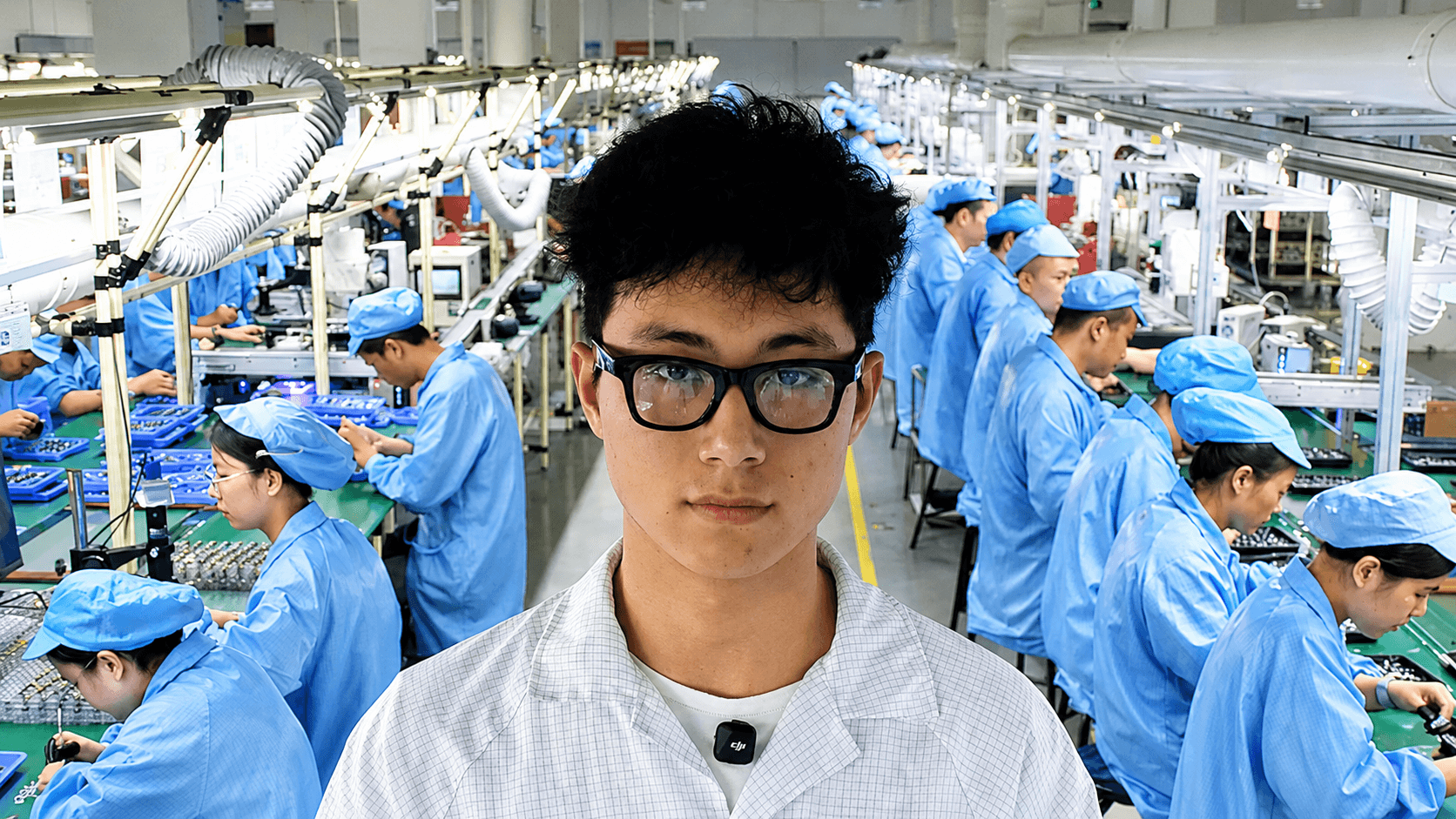
At factories across Asia, workers are wearing smart glasses that quietly record every movement they make.
Jayanth Kumar
May 22, 2026
Every hand motion.
Every machine interaction.
Every repeated task.
Not for surveillance.
But to train robots.
Behind this idea is Eddy Xu, a young founder who recently dropped out of Columbia University to build a company called Build.
His mission is ambitious:
create “physical super intelligence” by teaching AI systems how humans perform real-world labor.
From Elite University to Factory Floors
Xu reportedly turned down an equity package worth more than $25 million because accepting it would have meant giving up on starting his own company.
Instead, he chose a far riskier path.
While much of the AI industry focuses on chatbots, image generators, and software agents, Xu believes the next frontier is physical intelligence AI systems that can operate in the real world, not just on a screen.
That belief led him to Build.
The company’s premise is simple but powerful:
before robots can replace human labor, they first need to understand how humans work.
How Build’s Technology Works
Build equips factory workers with AI-powered smart glasses that capture first-person footage of tasks being performed in real industrial environments.
The system records:
Hand movements
Machine interactions
Repeated workflows
Environmental context
Step-by-step task execution
That footage is then converted into structured training data for robotic systems.
In essence, Build is trying to create a massive behavioral dataset for physical work similar to how internet-scale text datasets helped train modern large language models.
The company has already collected:
2,500 video clips
More than 400,000 recorded actions
Data from factories across Asia
Now Build is preparing to expand operations into the United States.
Why This Matters
Modern AI systems have become remarkably capable in digital environments.
They can:
Write code
Generate designs
Analyze documents
Automate customer support
Reason through complex workflows
But physical work remains one of AI’s biggest unsolved challenges.
Robots still struggle with adaptability, dexterity, spatial awareness, and the unpredictable nature of real-world environments.
Training robots traditionally requires expensive simulations, manual programming, or highly controlled conditions.
Build’s approach attempts to solve that problem by learning directly from humans.
Instead of programming every movement manually, robots observe human workers first.
The strategy mirrors how humans themselves learn:
through observation, repetition, and imitation.
The Bigger Vision: Physical Super Intelligence
Xu describes the long-term goal as building “physical super intelligence.”
That means AI systems capable of performing real-world labor at scale across industries like:
Manufacturing
Warehousing
Logistics
Construction
Maintenance
Industrial operations
If successful, companies like Build could become foundational infrastructure for the next wave of robotics.
Just as companies such as OpenAI trained language models using internet-scale text, Build wants to train physical AI using human activity data.
In that sense, factory floors may become the next data frontier.
The Ethical Tension
The idea is both exciting and uncomfortable.
Workers are effectively helping train the systems that could one day automate their own jobs.
Supporters argue automation is necessary due to labor shortages, aging populations, and rising manufacturing costs.
Critics warn it could accelerate workforce displacement and concentrate even more power in the hands of technology companies.
That tension sits at the center of Build’s business.
The company is not simply building robots.
It is building the learning layer that could allow robots to understand human labor itself.
The Race to Train the Physical World
The AI race is no longer confined to software.
Tech companies are increasingly competing to dominate robotics, automation, and embodied AI — systems that can interact with the physical environment.
Whoever builds the best training infrastructure may gain a major advantage.
And right now, one of the companies attempting that is being led by a college dropout with smart glasses and an unusually ambitious vision for the future of work.
Whether Build becomes a breakthrough robotics company or simply an early experiment in physical AI, it reflects a growing reality:
The next phase of artificial intelligence will not just think like humans.
It will try to work like them too.
About

Featured Posts




Explore Topics