>
>
He Built a Billion-Dollar Startup, Retired His Parents, Turned Down $60 Million and Then the Hard Part Started.
He Built a Billion-Dollar Startup, Retired His Parents, Turned Down $60 Million and Then the Hard Part Started.
Vinay Hiremath's post-exit essay was titled "I am rich and have no idea what to do with my life." The startup world doesn't talk enough about what it describes.
Jayanth Kumar
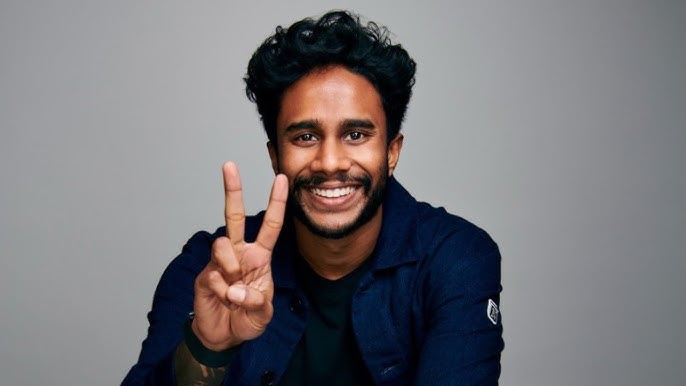
When people talk about startup exits, they talk about the number. What they talk about far less is what often comes next when the urgency disappears, the calendar clears, and no one needs you in the morning anymore.
Vinay Hiremath, co-founder and former CTO of Loom, has been unusually public about that experience. After Atlassian acquired Loom in October 2023 for close to $975 million, Hiremath was offered a reported $60 million to stay on and help with the transition. He said no.
From the outside, that choice can seem baffling. From the inside, it made sense. Staying would have extended a role he already felt done with. Leaving meant freedom but also the kind of disorientation that financial security can't fix on its own.
Hiremath had spent nearly a decade becoming Loom. He dropped out of the University of Illinois and teamed up with Joe Thomas and Shahed Khan in 2016 to build a simple video messaging tool for workplace communication. It worked. Loom scaled to more than 25 million registered users and roughly 200,000 paying customers. Users were recording over 1.5 billion minutes of video every quarter. With nearly $200 million raised from Sequoia and Andreessen Horowitz, the company's valuation reached around $1.5 billion by 2021.
When a company grows like that, the founder often grows into it just as completely. The metrics become the identity. The momentum becomes the meaning. Hiremath later wrote that as Loom continued to scale, his sense of self became tied to the company's performance. When the business went through its first layoffs, he wrote that he felt the blow personally like a part of himself had failed alongside it.
After the acquisition, what replaced that structure was largely silence. He explored public policy. He tried robotics startups. He climbed Himalayan peaks. He took physics courses in Hawaii. Each pursuit offered novelty, but none offered permanence. Without deadlines or responsibility, everything felt optional and therefore weightless.
There was at least one moment that cut through all of it. Using proceeds from a secondary sale, Hiremath gave $1.7 million to his parents so they could retire. He later described watching their faces as the significance settled in as probably the most meaningful thing money has given him.
But the larger question who am I when I'm no longer building this company? didn't resolve itself automatically. And that, Hiremath has suggested, is the honest part of the exit story that rarely gets told. Purpose doesn't reappear on its own once the pressure lifts. It has to be rebuilt, slowly and without the familiar scaffolding of metrics and momentum.
The exit was real. The number was real. The difficulty that followed it was just as real and probably more useful to acknowledge.
About

Explore Topics